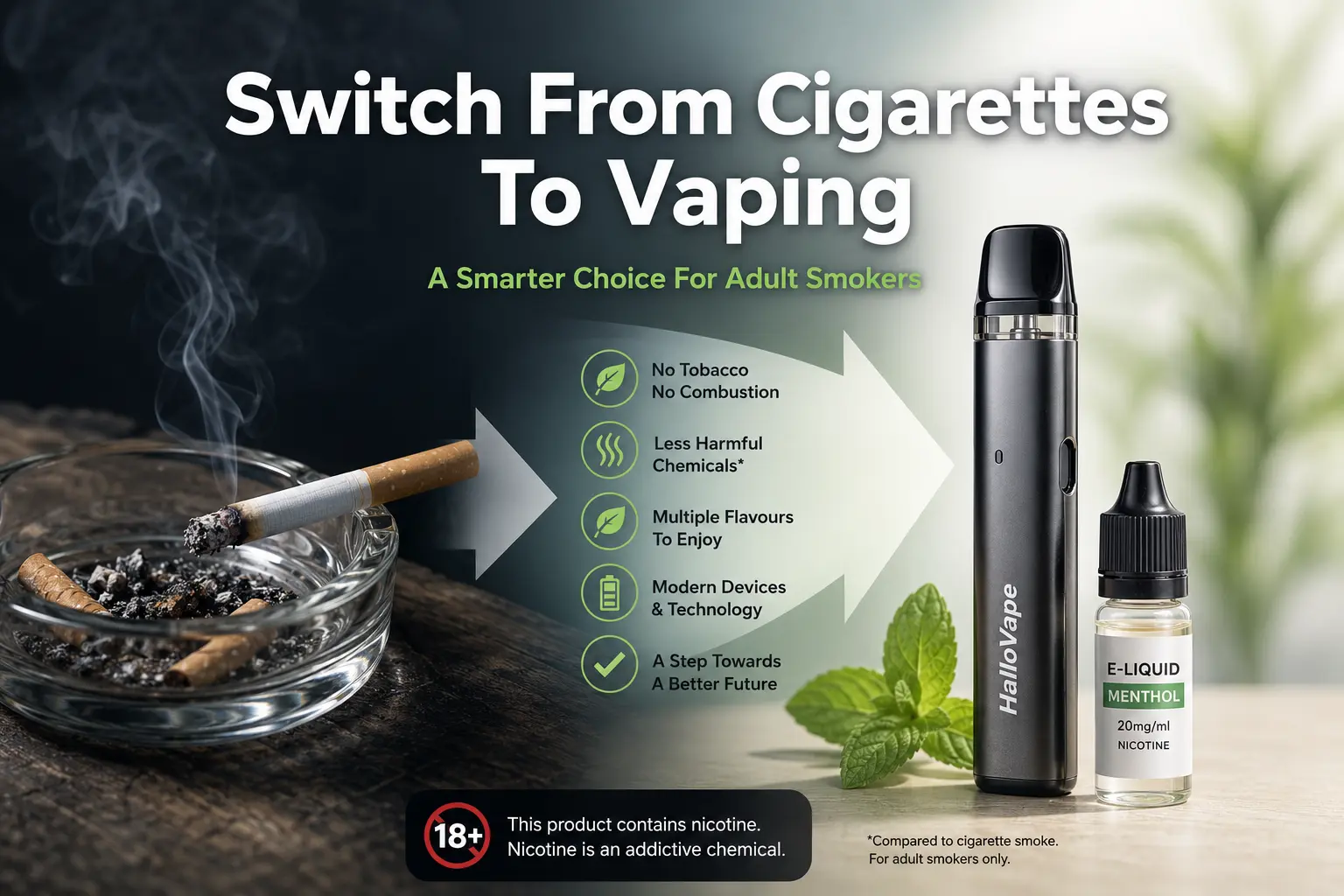
For adult smokers, switching away from cigarettes can be a significant step toward reducing their exposure to the harmful chemicals produced by burning tobacco. Vaping is one alternative that some adult smokers choose when they are looking for a way to move away from combustible tobacco while continuing to use nicotine.
Vaping is not the same as smoking. A cigarette burns tobacco and produces smoke containing thousands of chemicals, while a vape device heats an e-liquid to create an aerosol. This fundamental difference is one of the main reasons vaping has become an alternative for some adult smokers.
However, vaping is not harmless. Most vape products contain nicotine, which is addictive, and vaping can expose users to substances that are not risk-free. People who do not smoke should not start vaping simply because it is presented as an alternative to cigarettes.
For an adult who already smokes cigarettes, the most important distinction is between replacing cigarettes and simply adding vaping to an existing smoking habit. The goal of switching is to move away from combustible tobacco rather than maintain two habits indefinitely.
This guide explains how vaping differs from smoking, how nicotine strengths work, the main types of vape devices, what adult smokers should consider when choosing a product, and how vaping may fit into a broader attempt to stop smoking.
Smoking vs. Vaping: What Is the Difference?
The biggest difference between smoking and vaping is what happens to the tobacco or nicotine product during use.
A traditional cigarette contains tobacco that is burned. Combustion creates smoke, and that smoke contains a complex mixture of chemicals. Some of these substances are responsible for much of the serious harm associated with cigarette smoking.
A vape device does not need to burn tobacco. Instead, it heats an e-liquid or vaping liquid, which may contain nicotine, flavourings and other ingredients, to produce an aerosol that the user inhales.
This does not mean that vaping is harmless. It means that the exposure profile is different. For adult smokers who completely replace cigarettes with vaping, the potential health implications are different from continuing to smoke combustible tobacco.
This distinction is important because many discussions about vaping become confusing when smoking and vaping are treated as exactly the same thing. They are not identical products, and they do not work in the same way.
For a smoker considering switching, the practical question is therefore not whether vaping is completely safe. It is whether moving completely away from combustible cigarettes may be a better option than continuing to smoke.
Why Some Smokers Choose Vaping
Smoking is not only about nicotine. For many smokers, cigarettes become connected with routines, environments and behaviours.
A person may associate smoking with their morning coffee, a break at work, driving, socialising, finishing a meal or dealing with stressful situations. The physical routine can become part of the habit alongside nicotine dependence.
Vaping can reproduce some of these behavioural elements. A person can hold a device, inhale from it and control when they use it. Some smokers find that this makes the transition feel more familiar than completely abandoning the physical act of inhaling.
Another reason people consider vaping is convenience. Modern devices can be compact and simple to use, and some products are designed to require little preparation.
For an adult smoker, these characteristics may make vaping an appealing alternative. However, convenience should not be confused with safety. The objective should remain clear: if vaping is being used as an alternative to cigarettes, the intention should be to move away from smoking rather than simply add another nicotine habit.
Understanding Nicotine
Nicotine is the primary addictive substance in tobacco. It is also present in many vaping products.
Nicotine itself is not the main reason cigarette smoke causes the majority of smoking-related disease. Much of the serious harm from smoking comes from the toxic mixture produced when tobacco is burned.
However, nicotine is still an important consideration. It can create dependence, and regular nicotine use can make stopping difficult.
This is why choosing an appropriate nicotine strength matters for adult smokers who are trying to move away from cigarettes. A strength that is too low may leave a smoker feeling unsatisfied, while a strength that is unnecessarily high may provide more nicotine than they need.
The ideal approach varies from person to person. Cigarette consumption, smoking frequency, individual nicotine dependence, device type and personal preference can all influence how a person responds to a particular strength.
Understanding Nicotine Strengths
One of the most confusing aspects of vaping for beginners is nicotine strength.
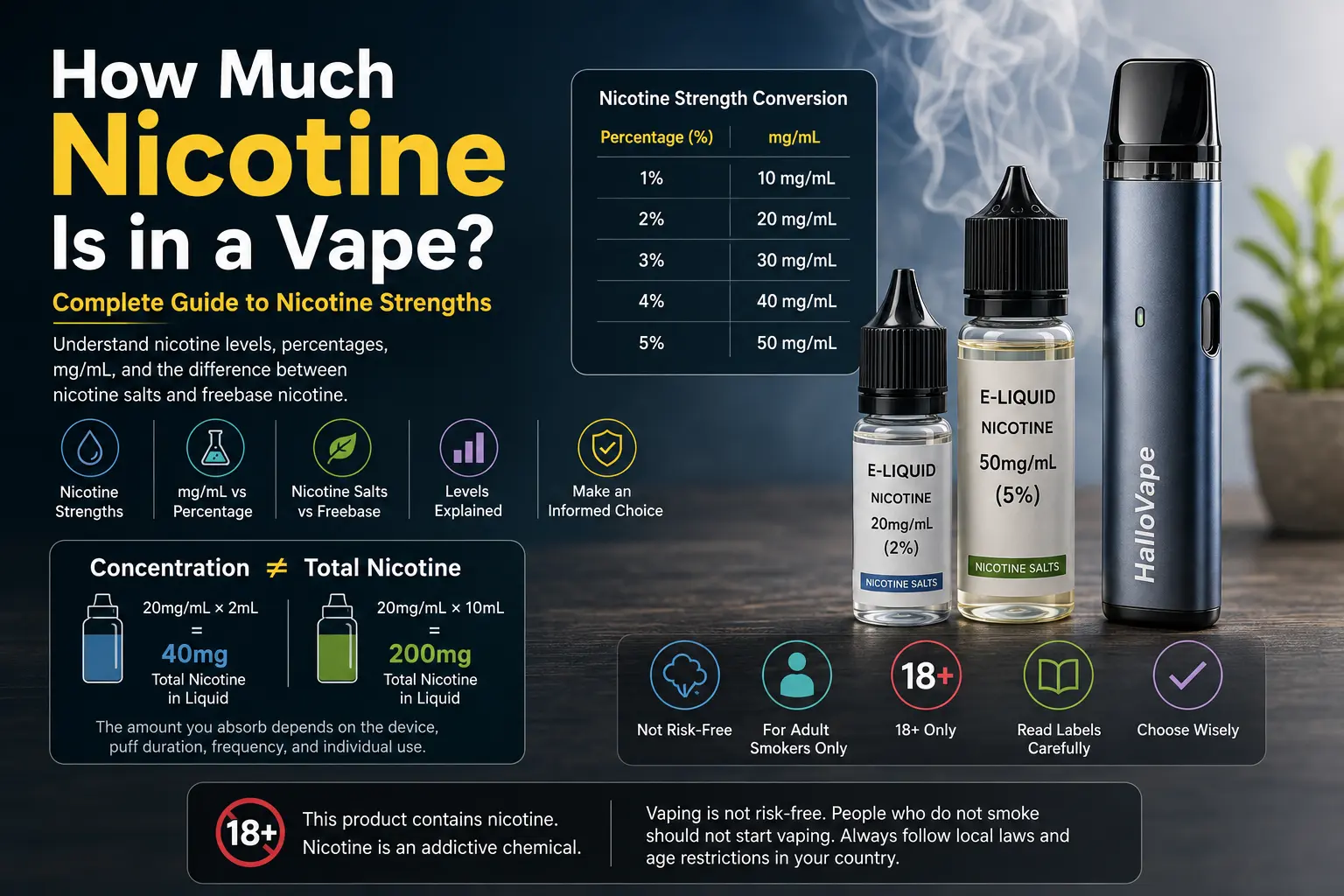
Nicotine strength is commonly displayed in milligrams per millilitre, written as mg/mL. For example, an e-liquid labelled 10 mg/mL contains 10 milligrams of nicotine per millilitre of liquid.
Other products may display nicotine concentration as a percentage. Understanding the relationship between the two measurements can make product labels much easier to interpret.
As a general conversion:
- 1 mg/mL = 0.1%
- 5 mg/mL = 0.5%
- 10 mg/mL = 1%
- 20 mg/mL = 2%
Therefore, a product labelled 20 mg/mL contains approximately 2% nicotine by concentration.
It is important not to assume that a higher number is automatically better. Nicotine strength should be considered in relation to the user's previous smoking pattern and the type of device being used.
mg/mL vs. Nicotine Percentage
If you are new to vaping, seeing both percentages and milligrams can initially be confusing.
The simplest way to think about the two measurements is that they describe the same concentration using different units.
For example, 20 mg/mL is approximately equivalent to 2%. Similarly, 10 mg/mL is approximately 1%.
When comparing products, always check which measurement is being used rather than comparing the numbers directly.
A product showing 2% is not necessarily twice as strong as one showing 20 mg/mL. In fact, they are approximately equivalent concentrations.
Understanding this simple conversion can help prevent one of the most common mistakes made by new vape users: choosing a product based only on the largest number printed on the package.
Nicotine Salts vs. Freebase Nicotine
Another term that adult smokers may encounter when researching vaping products is nicotine salts.
Nicotine salts are a form of nicotine used in many modern pod systems and disposable-style vape products. They are formulated differently from traditional freebase nicotine.
One reason nicotine salts became popular is that they can provide relatively high nicotine concentrations while producing a smoother-feeling inhalation than some equivalent-strength freebase formulations.
Freebase nicotine has traditionally been used in many e-liquids and is still common in refillable vape devices.
Neither term automatically tells you whether a product is appropriate for you. Device design, nicotine concentration, inhalation style and personal tolerance all matter.
For adult smokers looking for a straightforward transition, understanding the difference can make it easier to compare products without assuming that one type is universally better.
Types of Vape Devices
Vape products are available in several different formats. The main categories include disposable vapes, pod systems, refillable devices and larger advanced devices.
Each type has different characteristics, and the best choice depends on what the user values most.
Disposable Vapes
Disposable vapes are designed to be simple and convenient. They normally arrive pre-filled and ready to use, depending on the specific product.
There is generally no need to refill a disposable device or manage bottles of e-liquid. This can make the format attractive to adult smokers who want a straightforward alternative.
However, users should always check the product specifications, nicotine concentration, capacity and applicable local regulations before purchasing or using any vaping product.
Pod Systems
Pod systems are compact devices that use replaceable or refillable pods.
They can offer more flexibility than disposables because the user may be able to change pods, flavours or nicotine strengths depending on the specific device.
For someone who wants a relatively small device but also wants more control over their setup, a pod system can be worth considering.
Refillable Vape Devices
Refillable devices allow users to add e-liquid manually.
This can provide a large amount of flexibility, but it also requires more involvement. Users need to select e-liquids, monitor the device, replace coils or pods when required and maintain the equipment properly.
For a beginner who simply wants convenience, this additional complexity may not be necessary.
Disposable Vapes
Disposable vapes have become popular because they simplify many of the steps associated with traditional vaping equipment.
For an adult smoker considering switching, simplicity can be important. A device that is easy to understand may remove some of the barriers that discourage beginners from trying an alternative to cigarettes.
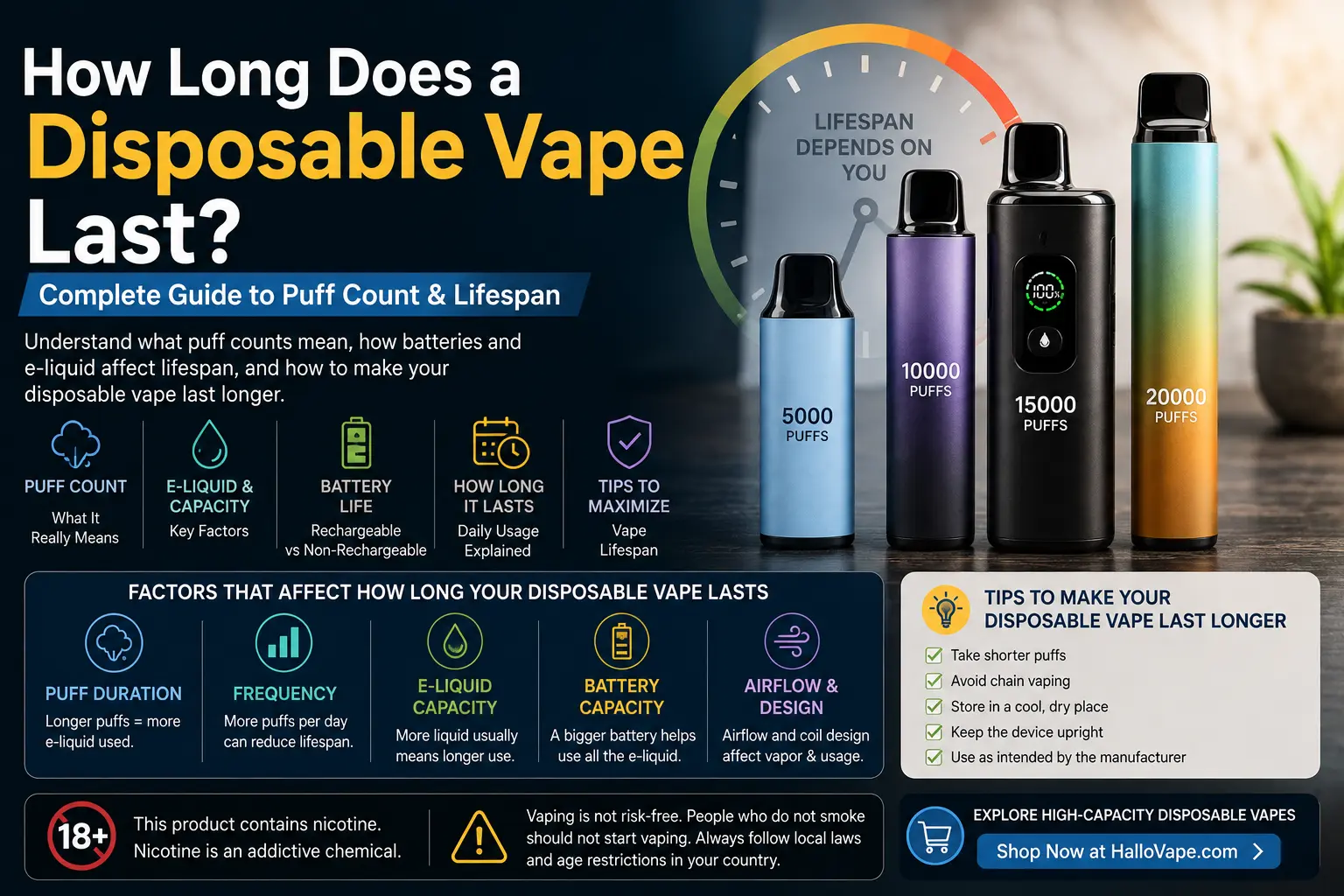
However, not every disposable vape is the same. Capacity, nicotine concentration, flavour selection, battery design, airflow and overall construction can vary considerably.
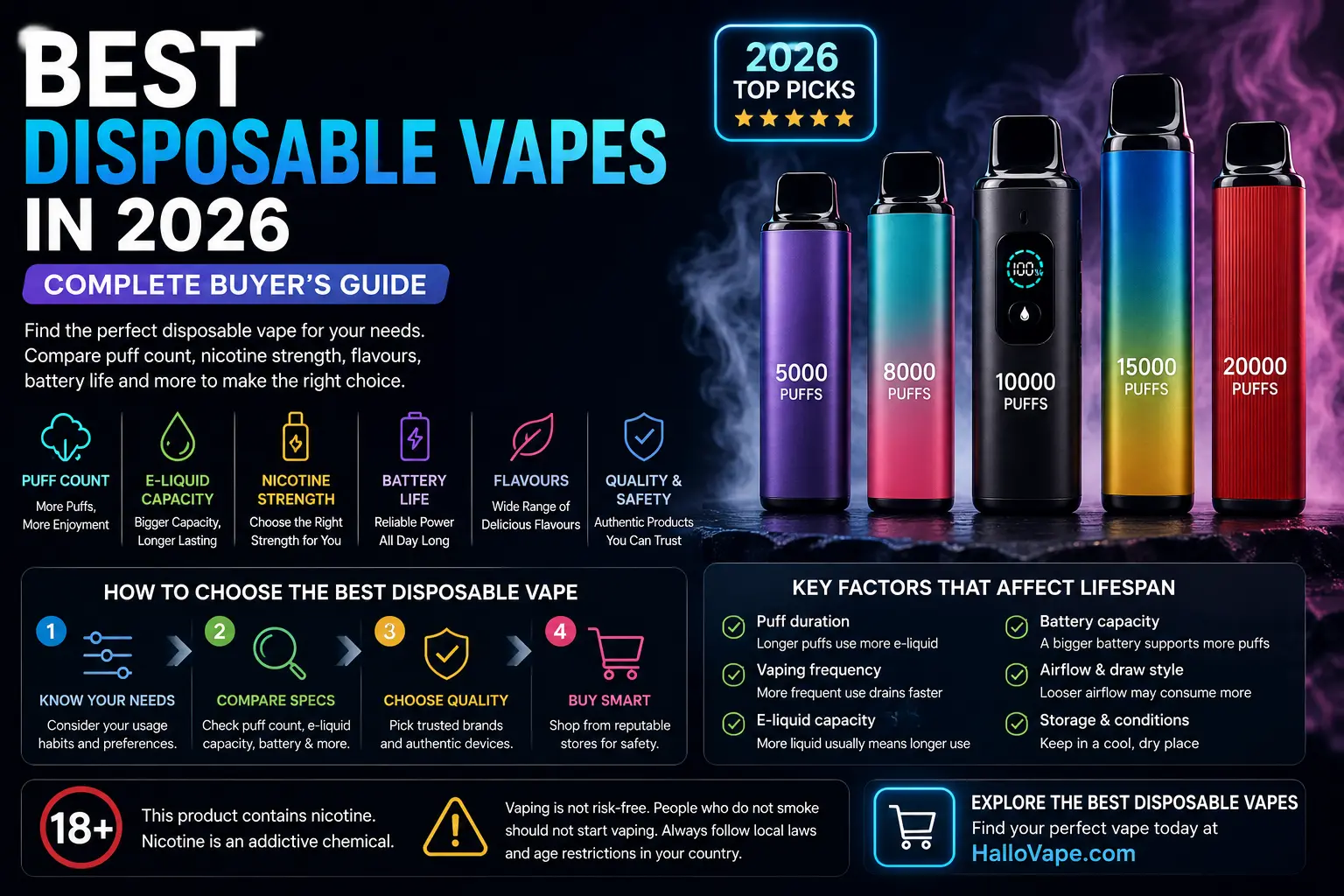
When choosing a disposable vape, do not focus only on the number of puffs advertised. Look at the complete product specification and make sure the product is legal and appropriate for your market.
How to Choose a Vape Device
Choosing a vape does not have to be complicated if you start with your actual needs.
First, consider convenience. If you want something ready to use with minimal maintenance, a disposable format may be more suitable than a refillable device.
Second, consider nicotine strength. An adult smoker should pay attention to the concentration listed on the product and avoid choosing solely based on packaging or marketing language.
Third, consider size and portability. Someone who wants a device for carrying throughout the day may prefer a compact product, while another user may prioritise battery capacity or a larger liquid capacity.
Fourth, consider flavour. Flavour is a personal preference, and there is no single flavour that works for everyone.
Finally, buy from a reputable source and check that the product information is clear. Product labelling, nicotine information and local legal requirements matter.
Choosing a Vape Flavour
Flavour can have a surprisingly important role when someone moves away from cigarettes.
Some adult smokers prefer tobacco-inspired flavours because they provide something familiar. Others prefer menthol, mint, fruit, beverages or dessert-inspired flavours because they want a completely different experience from cigarettes.
There is no universal best flavour. The best option depends on personal preference.
For someone trying to replace cigarettes, choosing a flavour that they genuinely enjoy may help make vaping a more acceptable alternative. On the other hand, if a flavour becomes unpleasant after repeated use, changing to another option may be reasonable.
The important point is to choose products based on informed personal preference rather than assuming that a particular flavour has special health benefits. Flavour does not make vaping harmless.
How to Approach Switching From Cigarettes
For a smoker, switching is usually more than simply buying a vape.
The first step is understanding your current smoking pattern. Think about how many cigarettes you normally smoke each day, when you smoke them and which cigarettes feel hardest to give up.
This can help you understand how strongly smoking is connected to your daily routine.
The next step is choosing a vaping product that is practical enough for you to use consistently. If the device is inconvenient, difficult to operate or unsuitable for your preferences, it may be harder to maintain the transition.
Once you begin using a vape as an alternative, the key goal is to reduce reliance on combustible cigarettes rather than treating vaping as an additional activity.
Some people can switch relatively quickly. Others require more time. There is no single timeline that applies to every smoker.
If you experience difficulty stopping cigarettes, do not interpret that as failure. Nicotine dependence can be difficult to overcome, and additional support may be useful.
What About Dual Use?
Dual use means using both cigarettes and vaping products.
This situation is important because simply adding vaping while continuing to smoke the same number of cigarettes does not accomplish the same thing as replacing cigarettes.
If a person moves from smoking a large number of cigarettes every day to vaping while smoking significantly fewer cigarettes, their exposure may change. However, continuing to smoke still exposes the person to the harmful products of tobacco combustion.
For this reason, smokers who choose vaping as an alternative should ideally view it as a route away from cigarettes rather than a permanent second nicotine habit alongside smoking.
If you are unable to stop smoking, professional smoking-cessation support can be useful. A doctor, pharmacist or smoking-cessation service can help you consider evidence-based options appropriate for your situation.
Can You Reduce Nicotine Over Time?
Some adult smokers who successfully move away from cigarettes eventually decide that they also want to reduce or stop nicotine use.
This is possible, but it does not need to happen immediately.
For some people, attempting to reduce nicotine too quickly can make the transition away from cigarettes more difficult. If nicotine levels are reduced before the person is comfortable without cigarettes, they may experience stronger cravings and return to smoking.
A more gradual approach may be easier for some users. Once someone has established a stable smoke-free routine, they can consider whether reducing nicotine is an appropriate next step.
There is no requirement for every person to follow exactly the same reduction schedule. Individual circumstances and nicotine dependence differ.
Common Beginner Mistakes
New vape users often make a few predictable mistakes.
Choosing Based Only on Nicotine Strength
A higher nicotine number is not automatically better. Strength should be considered together with device type, usage pattern and previous smoking habits.
Buying Without Checking the Specifications
Product names alone do not tell you everything you need to know. Check nicotine concentration, capacity, device type and other relevant specifications.
Expecting Vaping to Feel Exactly Like a Cigarette
Vaping and smoking are different experiences. Even if vaping provides nicotine and satisfies some behavioural elements, the sensation, flavour and inhalation can be different.
Continuing to Smoke Without a Plan
If the objective is to replace cigarettes, continuing to smoke indefinitely without considering the transition defeats much of the purpose.
Ignoring Nicotine Dependence
Vaping can still involve nicotine dependence. Switching away from cigarettes does not necessarily mean that nicotine dependence disappears.
Starting With Too Many Products
Beginners do not necessarily need multiple devices, numerous flavours or complicated equipment. A simple setup may be easier to understand and evaluate.
Example: JNR Alien 10K
For adult smokers looking for a ready-to-use disposable format, the JNR Alien 10K is one example of a disposable vape product available through HalloVape.
The advantage of looking at a specific product page is that you can review the available product information instead of choosing solely from a generic description. Before purchasing, check the listed nicotine strength, product specifications, flavour options and any applicable restrictions in your country.
If you are specifically interested in this device, you can view the JNR Alien 10K product page and compare its specifications with the alternatives available in the shop.
Remember that product suitability is personal. A device that works well for one adult smoker may not be the best choice for another. Convenience, nicotine strength, flavour preference and usage habits should all be considered.
Vaping and Smoking Cessation
Smoking cessation is the process of stopping tobacco use. For many smokers, this can be challenging because nicotine dependence is combined with established behavioural routines.
Vaping is one approach that some adult smokers use when attempting to move away from cigarettes. Research has found evidence that nicotine vaping can help some adults quit smoking, although success varies and vaping is not risk-free.
The most important practical principle is that the benefit of switching is closely connected to actually moving away from combustible cigarettes.
Someone who completely stops smoking and uses vaping instead has changed their exposure to tobacco smoke. Someone who continues to smoke heavily while also vaping has not made the same change.
For people who want to quit smoking, vaping can therefore be considered as one option among several. Nicotine replacement therapy, prescription medicines, behavioural support and structured smoking-cessation programmes are other approaches that may be appropriate.
If you are unsure which approach is right for you, speak with a healthcare professional or a recognised smoking-cessation service.
Who Should Not Start Vaping?
Vaping should not be presented as something everyone should try.
Adults who have never smoked do not need to start vaping. Beginning nicotine use can create dependence where none previously existed.
Young people and people below the legal age for purchasing or using nicotine products should not use vaping products.
Pregnant people should seek professional medical advice about nicotine use rather than starting vaping independently.
People with specific medical conditions, medication concerns or questions about nicotine should also speak with an appropriate healthcare professional.
The purpose of discussing vaping as an alternative is specifically to provide information for adult smokers who are already using combustible tobacco. It is not an argument for non-smokers to begin vaping.
Frequently Asked Questions
Is vaping safer than smoking cigarettes?
Vaping is not risk-free. However, for adults who already smoke, completely switching from combustible cigarettes to vaping can substantially reduce exposure to many harmful substances produced by burning tobacco. The healthiest option is not to smoke or vape, but switching completely away from cigarettes may be a lower-risk alternative than continuing to smoke.
Can vaping help me quit smoking?
Evidence suggests that nicotine vaping can help some adult smokers stop smoking. Success varies between individuals, and vaping should be viewed as one possible smoking-cessation approach rather than a guaranteed solution.
Should a non-smoker start vaping?
No. People who do not smoke should not start vaping. There is no reason to introduce nicotine dependence when someone does not already use nicotine.
Does vaping always contain nicotine?
No. Some vaping products are sold without nicotine. However, many commonly available vape products contain nicotine, so consumers should always check the product label and specifications.
What does 20 mg/mL nicotine mean?
It means the product contains approximately 20 milligrams of nicotine per millilitre of liquid. This is approximately equivalent to a 2% nicotine concentration.
What is the difference between 2% and 20 mg/mL?
They are approximately equivalent concentrations. A 2% nicotine concentration corresponds to about 20 mg/mL.
What are nicotine salts?
Nicotine salts are a formulation of nicotine commonly used in pod systems and disposable-style products. They can allow relatively high nicotine concentrations with a smoother inhalation experience than some equivalent freebase formulations.
Is dual use better than smoking only?
The situation is more complicated than simply adding vaping to smoking. The major objective should be to move away from combustible cigarettes. Continuing to smoke still exposes a person to the harmful products of tobacco combustion.
How long does it take to switch completely from cigarettes?
There is no universal timeline. Some smokers switch quickly, while others need more time and support. Nicotine dependence, smoking habits, device choice and personal circumstances can all affect the process.
Can I eventually stop using nicotine?
Yes. Some people reduce their nicotine intake gradually after successfully stopping cigarettes. Others may need more time. A gradual reduction can be considered once a person has established a stable smoke-free routine.
How do I choose my first vape?
Start with simplicity. Consider the device format, nicotine strength, flavour, portability and maintenance requirements. Adult smokers often find straightforward devices easier to understand than complex advanced equipment.
Are disposable vapes easier for beginners?
They can be. Disposable devices are generally designed to minimise maintenance and preparation. However, product specifications and local regulations should always be checked before purchasing or using one.
How do I choose a vape flavour?
Flavour is personal preference. Some smokers prefer tobacco or menthol-style flavours, while others prefer fruit, mint or other profiles. Choosing a flavour that you find acceptable can make the experience more comfortable, but flavour does not make vaping risk-free.
Can vaping completely remove the risks of smoking?
No. Vaping is not risk-free, and it does not eliminate all health concerns associated with nicotine use. The key difference is that vaping does not involve the same tobacco combustion process as smoking cigarettes.
What should I do if I cannot stop smoking?
Do not assume that difficulty switching means you have failed. Nicotine dependence can be difficult to overcome. Consider speaking with a doctor, pharmacist or recognised smoking-cessation service about additional support and evidence-based treatment options.
Conclusion
For adult smokers, vaping can be considered as one alternative to combustible cigarettes. The important distinction is that vaping should not simply become an additional habit alongside smoking. The potential harm-reduction benefit is greatest when an adult smoker moves completely away from cigarettes.
Understanding the basics can make the process easier. Nicotine strength, device type, nicotine formulation, flavour, portability and personal usage patterns all influence which product may be appropriate for an individual adult smoker.
If convenience is your priority, a disposable vape may be easier to use than a refillable system. If you want greater control, a pod or refillable device may provide more flexibility. The right choice depends on your needs and preferences.
If you are considering a specific disposable product, you can view the JNR Alien 10K at HalloVape and review the available product information before making a decision.
The most important point is simple: vaping should not be promoted as harmless, and people who do not smoke should not start. For an adult who already smokes, however, moving away from combustible tobacco is an important distinction and may represent a meaningful change compared with continuing to smoke cigarettes.
Explore the JNR Alien 10K
Looking for a convenient disposable vape? View the JNR Alien 10K and check its available product specifications and options.
View JNR Alien 10KDisclaimer: This article is provided for general educational and informational purposes only and does not constitute medical advice. Vaping products may contain nicotine, and nicotine is addictive. Vaping is not risk-free. People who do not smoke should not start vaping. Always follow the laws, age restrictions, product requirements and regulations applicable in your country.